By Johannes Cairns
As a bioscientist by training and primary career, I recently completed a second PhD in environmental humanities. One motivation was a growing sense of disconnection from discussions about values, human agency, and the role of science in responding to major global crises.
In bioscience, researchers can easily become absorbed by grants, publications, positions, novel methods and frontier questions. These are important for advancing science, but social relevance does not always require another new insight into reality.
Sometimes the greater challenge is to make better use of knowledge we already have within existing policies and societal realities, a phenomenon known as the knowledge-action gap.
Beyond the Knowledge-Action Gap
My “affair” with environmental humanities gave me space to make these tensions themselves subjects of research:
- How do people understand their agency and responsibility?
- How do values shape what we do with knowledge?
- And what is the role of a researcher when the phenomena we study are also crises in which we ourselves participate?
I explore some of these questions in my chapter Tutkijuus keskellä sosioekologista kriisiä [Being a researcher amidst the socioecological crisis] in the open-access anthology Research & Activism: Tutkimuksen ja aktivismin kietoumia.
I think that the same problem concerns us as citizens more generally. Careers, families and the practical demands of daily life can consume most of our attention. In the process, it is easy to lose sight of the fact that we are more than professionals or parents. We are also individuals and citizens with the potential for agency in shaping the societies and world we inhabit.
Making Space for What Matters
Exercising that agency, however, requires space: space in everyday life to reflect on what matters, and spaces where different experiences, disciplines and ways of understanding the world can genuinely meet.
These questions resurfaced for me at a recent Kone Foundation workshop on religion, environmental change and the climate crisis. The discussions moved between disciplinary boundaries, religious and other value systems, activism, and the societal role of researchers. I particularly valued having a setting in which such questions could be discussed across fields rather than treated as peripheral to our “actual” research.
This need for spaces that connect reflection with action is also part of the motivation behind the HEH Good Life Think and Do Tank. The aim is not simply to generate more knowledge about planetary well-being, but to create transdisciplinary spaces where knowledge, values, experience and practical agency can encounter one another.
For me, the Kone workshop was a welcome reminder of why such spaces matter: responding to socioecological crises requires knowledge, but also opportunities to consider together what we value and what we choose to do with what we already know.
Further reading:
Kone Foundation: Monitieteisyys uskonto- ja ympäristötutkimuksessa
Johannes Cairns: Tutkijuus keskellä sosioekologista kriisiä, in Research & Activism: Tutkimuksen ja aktivismin kietoumia
About the Author
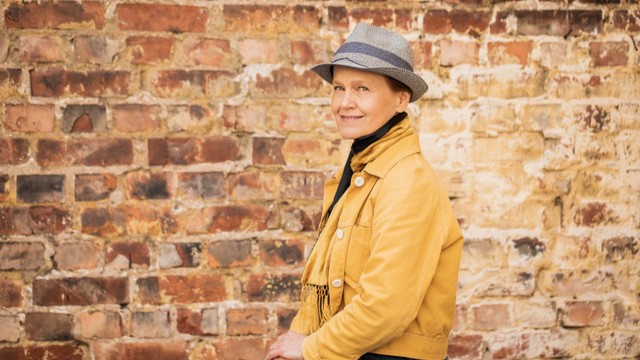
Johannes Cairns is one of the founders and Chair of the Board of HEH. He is also a scientist working on antimicrobial resistance.