By Helena Sinervo
Human beings have a remarkable ability to see reality as we wish it to be rather than as it actually is. This is, for example, part of the reason why Germans living under National Socialism either did not know about the concentration camps or chose not to know. We are social animals, and we want to believe that things are fine and that life will continue smoothly as before. When crises arise, we hope they will be resolved as they were in ancient plays, where a crane on stage would lower gods from the heavens to intervene in the course of the story.
Today, that supernatural figure descending from above might well be AI. Oil companies, for example, have been enthusiastic adopters of AI and have used it to increase their production and profitability. Although the green transition is well underway, the use of fossil fuels has also increased. In practice, this means that economic growth continues to increase the consumption of natural resources. When a new technological invention is introduced, the use of existing technologies and resources may increase as well.
When political decision-makers, almost regardless of their party affiliation, claim – as, for example, Alexander Stubb and Pekka Haavisto did in their presidential election debates – that economic growth and solutions to ecological problems are not in conflict with one another, they perpetuate a dangerous illusion. What kind of economy we should have is at the very heart of the sustainability challenge.
I, too, have buried my head in the sand and ignored sustainability issues for decades. In the 1970s, I never finished reading The Limits to Growth, the report by the Club of Rome. I found the researchers’ projections of possible future developments so bleak that I gave up my beloved nature hobbies – birds, plants and fungi – and turned to another passion, playing the piano. It has proved wonderfully therapeutic: it is difficult to play Bach and Mozart while consumed by a sense of impending catastrophe.
The first task is to imagine a good life
Fifty years later, however, I have come to believe that we must see reality as it is and do what we can, each of us in our own sphere, to influence the course of events. For the sake of young people, children and babies. For the sake of the extraordinary natural world around us. And for the sake of Bach and Mozart.
That is why I joined HEH from the very beginning, starting with its founding meeting, and why I hope as many people as possible will join us. It is wonderful to connect with experts from different fields, because each of us has only a limited perspective, knowledge and experience of the complex interplay between planetary crises and their societal consequences.
Some sustainability researchers believe that the best we can do now is prepare for the collapse projected to occur around the middle of this century. I want to believe that things are not quite that bad. It is never too late, but there is already an urgent need for change. We need to influence people at every level – from decision-makers to voters – as well as the values that drive overconsumption, as effectively as possible.
The first task is to imagine – and to encourage others to imagine – what a good life within planetary boundaries could look like.
Surely such a life is possible?
About the Author
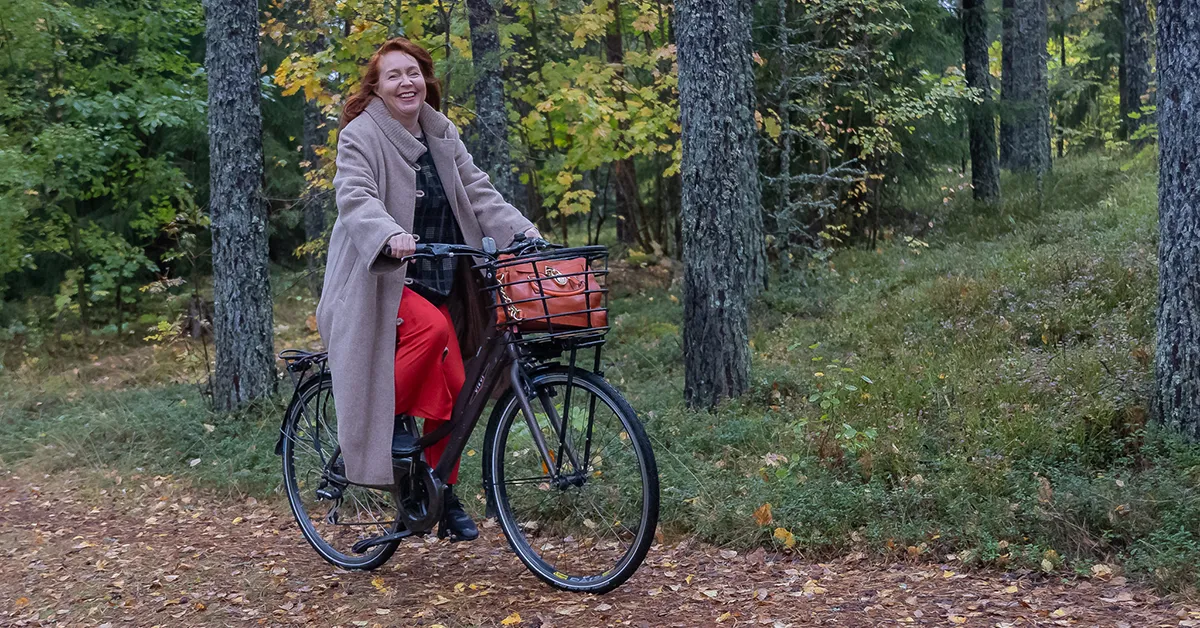
Helena Sinervo is one of the coordinators of HEH’s working groups. She is also a Finnish poet, novelist and translator.